Solar Panels in Karachi: The 2026 Homeowner’s Cost & Setup Guide
If you live in a city of relentless sun and rising bills, installing solar panels in Karachi is close to a no-brainer in 2026. From DHA and Clifton to Gulshan and North Nazimabad, rooftops are filling with modules because grid power is expensive, unpredictable, and only getting pricier. Karachi’s coastal climate delivers strong year-round irradiation, so a properly designed array pays for itself fast and then keeps delivering for decades.
This guide breaks down panel types, realistic costs, system sizing for Karachi homes, and the maintenance habits that keep output high despite salt air and dust. Read it before you request a single quote.
Why Karachi Is Ideal for Rooftop Solar
Karachi enjoys more than 300 sunny days a year and sits at a latitude that keeps generation steady across the seasons. Unlike northern Pakistan, winters here stay mild, so your array barely dips in December and January.
The city’s steady sea breeze also works in your favour. Solar modules lose efficiency as they heat up, and Karachi’s ventilation keeps panel temperatures lower than in the dead-still plains of Punjab. That means installing solar panels in Karachi often yields a slightly better real-world ratio than the same hardware inland.
- Consistent generation across all four seasons.
- Sea breeze keeps panels cooler and more efficient.
- Net metering credits exported units against night-time use.
- Strong protection against future tariff shocks.
Choosing the Right Type of Panel
Three technologies dominate the market, and the gap between them matters for a cramped urban rooftop where every square foot counts.
Monocrystalline
The default premium choice. Highest efficiency, best low-light performance, and the smallest footprint per watt, which is perfect for compact Karachi roofs.
Polycrystalline
Cheaper per panel but less efficient, so you need more roof area for the same output. A reasonable budget pick for large, unshaded terraces.
Half-cut and bifacial modules
Newer designs that squeeze extra yield from partial shading and reflected light. They cost a little more but shine on rooftops with parapet walls or water tanks casting shadows.
How Much Do Solar Panels Cost in Karachi?
Total cost depends on system size, inverter choice, and mounting structure. The single biggest variable after the panels themselves is the inverter, so always ask your installer to itemise the solar inverter price in Pakistan separately from the modules and labour.
| System Size | Typical Home | Annual Units Generated | Common Inverter Type |
|---|---|---|---|
| 3 kW | Apartment / small home | ~4,500 | On-grid string |
| 5 kW | Standard family home | ~7,500 | Hybrid |
| 10 kW | Large home, heavy AC | ~15,000 | Hybrid + battery |
| 15 kW+ | Villa / small commercial | ~22,500 | Three-phase hybrid |
Most Karachi homeowners choose a 5 kW hybrid because it balances upfront cost against backup during outages. Payback usually lands between three and five years, after which your generation is essentially free electricity for the remaining panel lifespan.
Sizing Your System Correctly
Start with your bill, not your roof. Gather a year of statements, calculate average daily consumption, and decide how much you want to offset. Partnering with reliable local experts ensures the design accounts for shading, roof orientation, and future load growth like an EV charger or an extra AC unit.
- Add up your last twelve months of units.
- Divide by 365 for your daily average.
- Match the array to cover 90–100% of that load.
- Leave headroom for appliances you plan to add.
Does Salt Air Damage Solar Panels Near the Coast?
It is a fair worry for a coastal city, but modern panels are built for it. Tier-1 modules carry salt-mist corrosion certification, and anodised aluminium or coated-steel mounting rails resist rust. The practical defence is simple: choose corrosion-rated hardware, rinse the panels during dry spells, and inspect the frames once a year. With those habits, coastal installations last just as long as inland ones.
Keeping Output High Year After Year
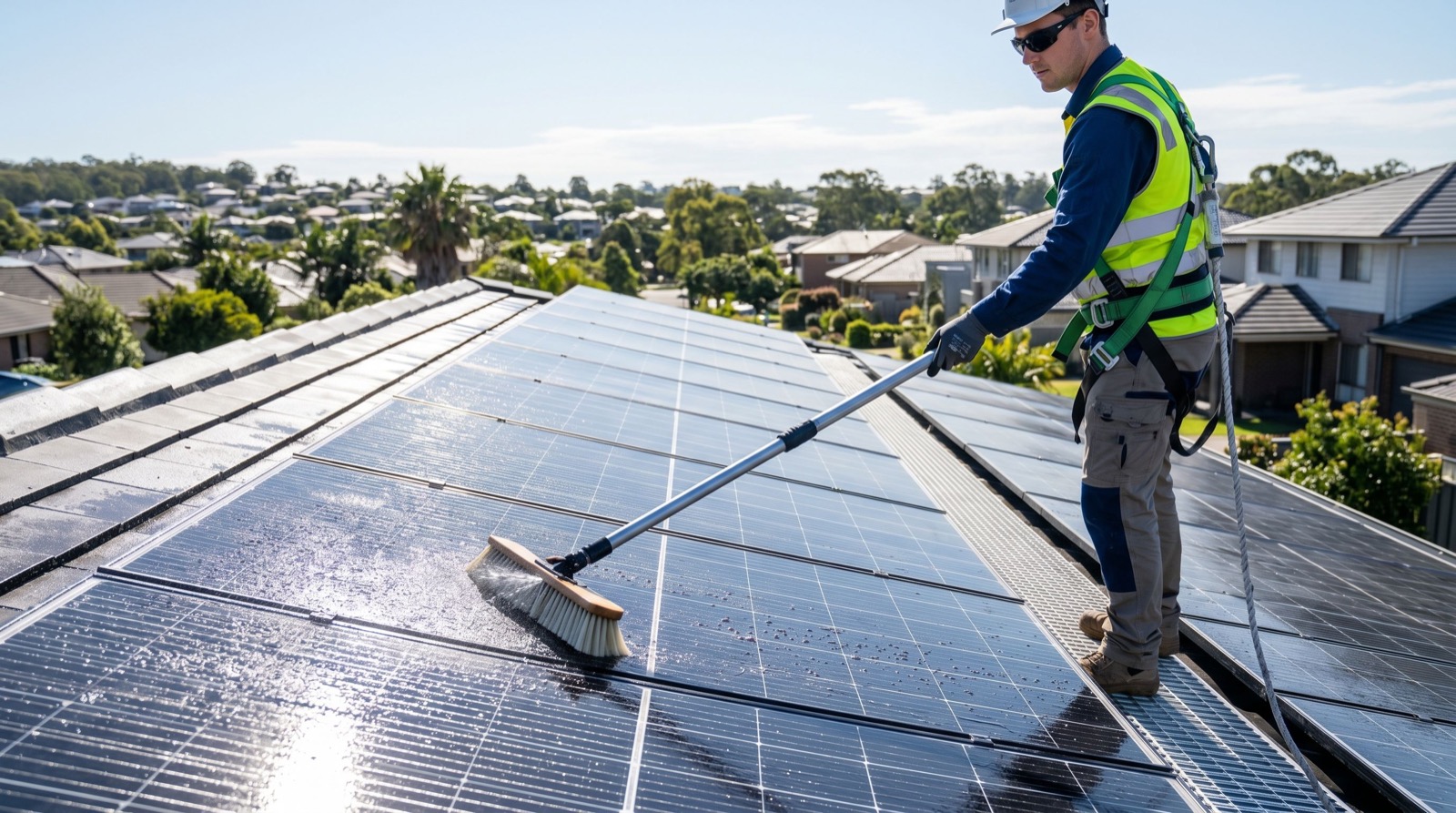
Dust is the real enemy in Karachi, not salt. A thin film of grime can cut output by several percent, so a quick rinse every few weeks during dry months pays for itself. Keep the inverter in a shaded, ventilated spot, and watch its app for sudden drops that signal a fault. For the bigger picture on Pakistan’s renewable rollout and grid integration, the Alternative Energy Development Board publishes current policy and capacity data worth reviewing before you invest.
Batteries, Backup, and Load-Shedding
Karachi’s outages make backup a genuine priority, not a luxury. A hybrid inverter paired with a lithium battery keeps essential loads running through load-shedding, so your fans, lights, router, and a couple of inverter ACs stay on while the neighbourhood sits dark. The trick is to size the battery to the loads you truly need, not the entire house, which keeps the cost sensible.
Lithium iron phosphate batteries now dominate new installations because they tolerate heat better, last more cycles, and deliver more usable capacity than older lead-acid banks. In Karachi’s warm climate, that thermal tolerance directly translates into a longer service life.
One practical tip from real installations: group your backup circuits onto a dedicated essential-loads panel. That way the inverter protects exactly what matters during an outage without draining the battery on heavy appliances like water pumps or large ACs. It is a small design decision that dramatically improves how long your backup lasts.
Frequently Asked Questions
How many solar panels do I need for a Karachi home?
A standard family home running several AC units typically needs a 5–6 kW system, which is roughly 9–11 modern high-wattage panels. Your actual count depends on panel wattage and monthly consumption.
Can I run my air conditioners on solar?
Yes. A correctly sized hybrid system handles multiple inverter ACs comfortably during the day, and a battery lets them run through evening peak hours or load-shedding.
How long do solar panels last in Karachi’s climate?
Quality panels carry a 25-year performance warranty and often keep producing beyond that. Coastal conditions do not shorten their life when you use corrosion-rated equipment.
Is net metering available in Karachi?
Yes. Eligible rooftop systems can connect under the national net-metering framework, exporting surplus units and offsetting your night-time grid usage.
The Bottom Line
For a sun-drenched coastal city, installing solar panels in Karachi is one of the highest-return upgrades you can make in 2026. Pick monocrystalline modules for tight rooftops, insist on corrosion-rated mounts, size the array against your real consumption, and keep the glass clean. Do that and you will trade a rising monthly bill for two-plus decades of self-generated power. Book a free site survey and lock in today’s panel prices before the next tariff increase.